Water analysis: what to order and how to read the report
Choosing water treatment without a laboratory report means guessing at equipment, and a wrong guess usually costs a whole treatment stage. Yet the price list a laboratory hands you runs to dozens of items, and half of them have no bearing on the choice of equipment. Here is what you have to order, how to take the sample, and what each line of the finished report actually drives.
The minimum set for sizing equipment
One analysis tells you whether the water is safe to drink; another tells you what equipment it needs. These are different lists. A process engineer cares less about "can you drink this" than about "what has to come out, and which unit takes it out". The minimum set for sizing:
- ✓Total hardness — calcium and magnesium salts. Determines scale and the need for softening.
- ✓Total dissolved solids or specific conductivity. A meter reads conductivity in seconds, which makes it the working estimate of the salt load; reports usually give it its own line and show dissolved solids as a calculated figure.
- ✓Total iron — total, not just dissolved: some of the iron in borehole water has already oxidised and travels as suspended solids.
- ✓Manganese. It almost always comes with iron and needs the same kind of treatment, but it oxidises far less readily.
- ✓Turbidity and colour — how much suspended solids and coloured organic matter the water carries.
- ✓pH and alkalinity. Neither selects equipment on its own, but together they decide whether everything else will work.
- ✓Hydrogen sulphide — order it separately and on a fresh sample: it off-gasses.
- ✓Permanganate index — an indirect measure of organics.
- ✓Microbiology — total microbial count and coliforms.
For membrane systems, add the parameters that set membrane life: silica, sulphates, chlorides and water temperature.
How to take a sample so the report is about your water
A good share of "strange" reports comes down to the sampling rather than the water.
- ✓Let the water run first instead of bottling the very first litre from the tap. On a borehole, pump until the water steadies; on a mains supply, a few minutes is enough.
- ✓Use the container the laboratory gives you, or a clean plastic bottle that held still drinking water. Bottles from soft drinks, mineral water or any chemical will not do.
- ✓Fill to the brim and cap it without an air bubble, or the iron will oxidise on the way.
- ✓Never rinse the bottle with detergent — rinse it with the water you are sampling.
- ✓Get the sample to the laboratory the same day, kept dark and cold. For microbiology and hydrogen sulphide, only a fresh sample in a sterile container from the laboratory will do.
- ✓Sample at the point where the equipment will stand. If a filter is already in the line, take the sample upstream of it, not downstream.
- ✓On seasonal sources, repeat the analysis at different times of year: a flood season shifts turbidity and organics far more than people expect.
From parameter to treatment unit
No line of a report maps onto exactly one machine, but as a first approximation the picture looks like this.
| Parameter | What it means in practice | Treatment unit |
|---|---|---|
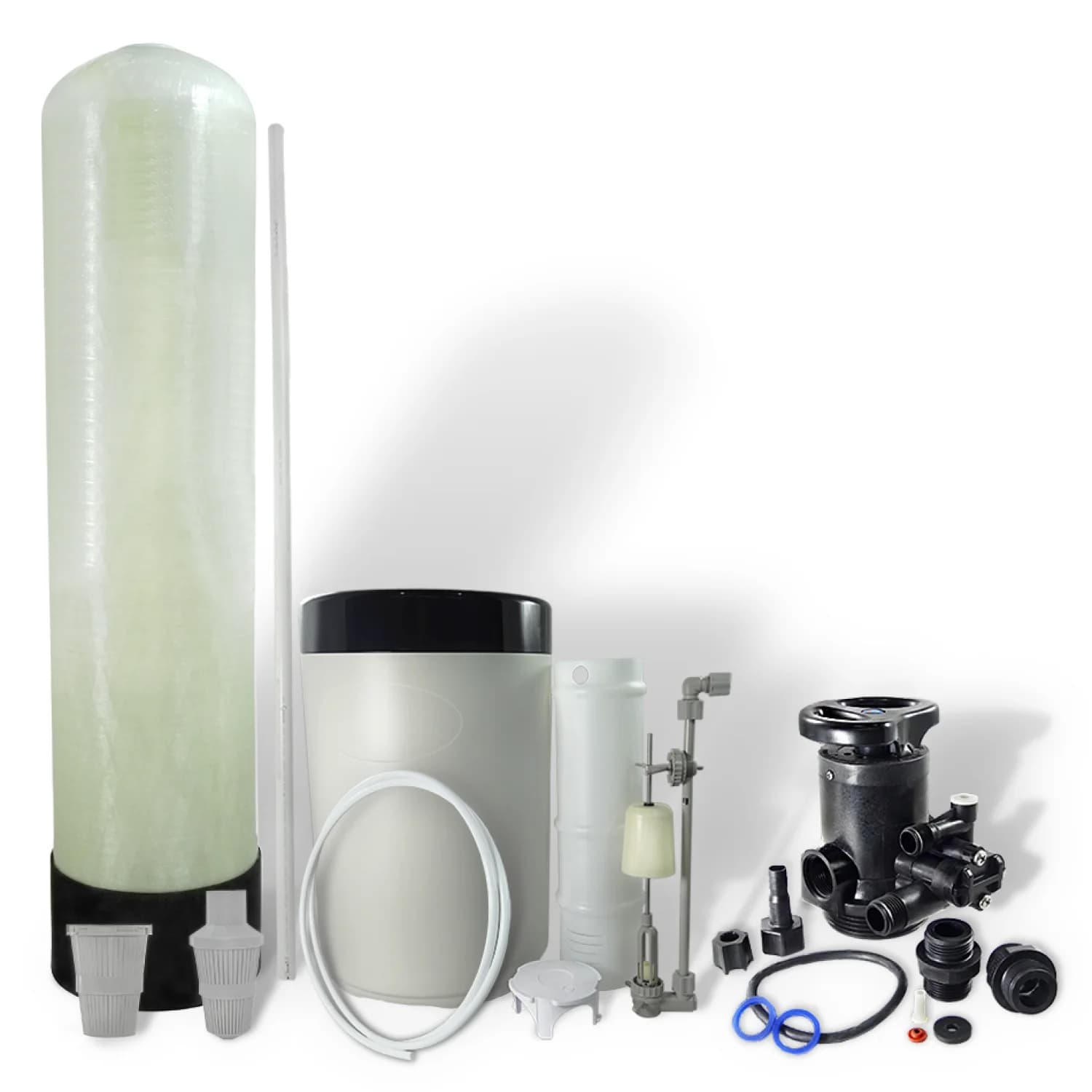
| Hardness | scale in the boiler, heat exchanger, coffee machine | ion exchange softener; reverse osmosis if the salts have to go as well |
| Dissolved solids, conductivity | brackish taste, salt load in the process | reverse osmosis, electrodeionisation for high-purity water |
| Iron, manganese | rusty and black streaks, deposits on plumbing | aeration column plus a reagent-free filter |
| Hydrogen sulphide | odour, corrosion | pressure aeration plus filtration |
| Turbidity, suspended solids | clogs the media and the membrane | mechanical filtration; a lamella clarifier as a pretreatment stage |
| Organics, colour | off-taste, load on the membrane | sorption, ultrafiltration |
| Microbiology | risk for drinking water | UV disinfection |
| pH, alkalinity | decides whether the other stages work at all | dosing station for a correcting reagent |
The aeration column sits ahead of the filter for a reason: dissolved iron, manganese and hydrogen sulphide have to be oxidised by the oxygen in air before the media can hold them back. Industrial reagent-free filters take out iron, manganese and hydrogen sulphide together with turbidity and colour, oxidising them on the media itself and flushing what has built up to drain during backwash.
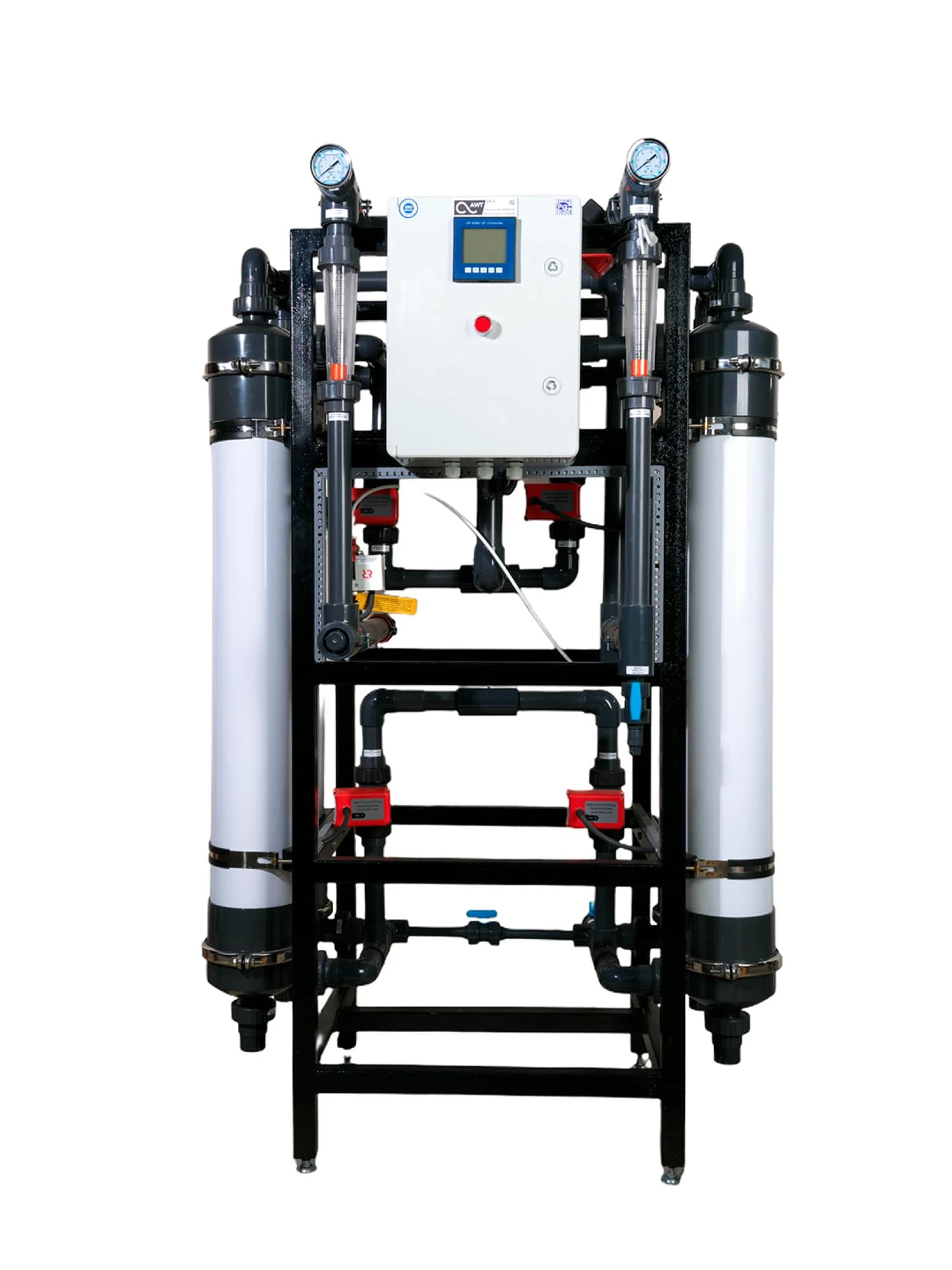
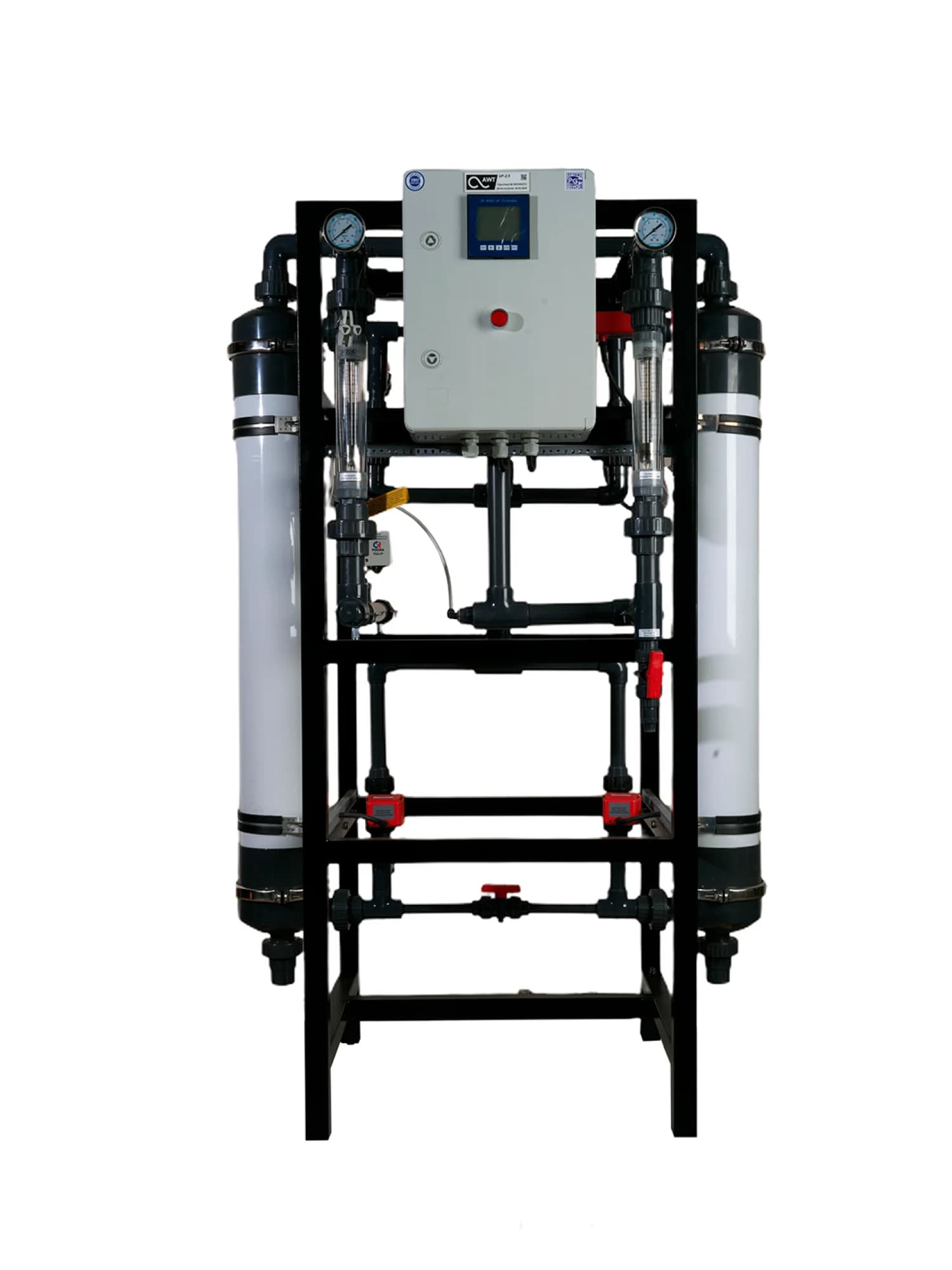
Among the membrane methods, ultrafiltration holds the line from 0.1 down to 0.01 µm — enough for suspended solids and bacteria, but it leaves dissolved salts in the water: those call for reverse osmosis.
Why a single parameter decides nothing
Parameters work together, and it is the combinations that get overlooked most often.
Iron and pH. The lower the pH, the slower iron oxidises in air. At a low pH a standard-size aeration column may not be enough, and you will need either more contact time or pH correction by dosing.
Iron and organics. Iron bound to organics is not removed by aeration at all: an organic coating shields it and it passes straight through the filter. The report shows iron like any other, yet the filter delivers nothing — which is why the permanganate index is ordered alongside iron, not instead of it.
Hardness and dissolved solids. A softener takes out hardness but does not lower total dissolved solids: it swaps calcium and magnesium ions for sodium. If the goal is to bring the salt load down, a softener is only pretreatment ahead of a membrane.
Turbidity and everything else. Suspended solids ruin whatever stage follows: they clog the resin bed, cut its capacity, foul the membrane. Mechanical treatment comes first, whatever stands after it.
How to read a finished report
The first thing to check is whether the sampling point and the date match the site and the season you are asking about. A two-year-old report on a neighbouring borehole is no use for sizing: within a single village, water from different aquifers differs noticeably.
Next, look at the detection limits. A value with a "less than" sign means the method could not see the substance below its threshold, not that the substance is absent. For membrane systems that difference sometimes matters.
Drinking water quality requirements are set by the regulator and differ from country to country, while discharge limits come from the water utility or the local regulator and are written into each site's discharge permit. So the "limit" column in a laboratory report only tells you which document the laboratory compared your water against; whether that document applies to your site is a separate question. For sizing, the measured value matters more than a "compliant" mark: equipment is sized from the number, not from the tick.
What next
Get a report covering the minimum set from a properly taken sample, then add your daily consumption, your peak flow and what the treated water has to meet — drinking, boiler feed or process. That is enough to start sizing.
With the report in hand, look at industrial water treatment: it brings together ion exchange units, reverse osmosis, ultrafiltration and electrodeionisation — the stages that cover most of the lines in your report. If you have no analysis yet, start with that: without numbers, sizing turns into guesswork.