Legionella in hotel hot water: where it lives and how it is kept under control
Legionella is a bacterium found in almost any fresh water, and it becomes a problem wherever water stands warm for long periods. A hotel hot water system offers it everything at once: temperature, stagnation and biofilm on pipe walls. Let us look at where the risk comes from, which parts of the network are dangerous and what each control method is really worth.
Why hot water, and why hotels
Legionella (Legionella pneumophila and related species) enters a building with the incoming water in small numbers, and that alone is not dangerous. Multiplication is. It takes place roughly between 20 and 45 °C, peaking around 35–37 °C. Below 20 °C the bacterium barely grows; above 50 °C it starts to die, and the higher the temperature, the faster: at 60 °C most of the population is killed within minutes, at 50 °C within hours.
Infection does not come from drinking the water but from inhaling fine droplets — an aerosol. Shower heads, whirlpool baths and spa pools, humidifiers, fountains and cooling towers all produce one. The disease takes two forms: severe pneumonia (Legionnaires' disease) and a milder fever without pneumonia. Older people, smokers and people with weakened immunity are the most vulnerable.
In this picture a hotel is a high-risk site by design, not by negligence. The network is long and branched, rooms stay empty for weeks, occupancy swings with the season, and every room has a shower. Water in the branch to an empty room cools to room temperature and stands still — exactly the conditions Legionella needs to multiply.
Biofilm: why the bacterium cannot simply be flushed out
Most Legionella in a system is not in the flowing water but in biofilm — a slimy layer of microorganisms on the inner walls of pipes, tanks and fittings. Inside the film the bacterium is protected from heat and chemicals, and part of its life cycle takes place inside protozoa (amoebae), which shield it even better.
This has one key practical consequence. Treatment that acts only on water as it passes through does not remove the source: the film stays on the walls and reseeds the water as soon as treatment stops. Legionella control is therefore not a one-off procedure but a regime maintained continuously.
Where the risk hides in the network
The danger points are the same in almost every building. They are the first things checked in a system survey:
- ✓Dead legs and capped branches left after refurbishments — the water in them is never replaced.
- ✓Rarely used outlets: empty rooms, staff showers, standby branches.
- ✓The bottom of the storage water heater, where sediment collects and the temperature stays below the set point.
- ✓The circulation return, if its temperature drops below 50 °C: part of the network is then running in the danger range.
- ✓Sections downstream of thermostatic mixing valves, where water is deliberately kept at 38–43 °C.
- ✓Shower heads and hoses: scale and residual water between uses.
- ✓Cold water that warms above 20–25 °C next to hot pipes or in sun-exposed tanks.
- ✓Whirlpool baths, cooling towers and humidifiers — separate aerosol sources with their own maintenance regime.
Temperature as the main tool
The generally accepted engineering approach to hot water systems is built on temperature. Water in the heater is kept at no less than 60 °C, in the circulation loop and on the return at no less than 50–55 °C, and hot water at the outlet should reach at least 50 °C within about a minute of opening the tap. Cold water is kept below 20 °C where possible. The values that are binding for a particular site are set by local health requirements and the design — what is described here is the engineering logic, not a regulation.
Temperature control needs two things that are often forgotten. The first is working, balanced circulation: if one branch receives too little flow, it cools down and the regime fails there even while the heater outlet reads correctly. The second is scald protection: with 60 °C in the heater, thermostatic mixing valves are fitted as close as possible to the outlet so that the section carrying tempered water after the valve stays short.
For empty rooms a simple rule applies: their taps are flushed regularly, running hot and cold until the temperature stabilises, usually at least once a week. It costs less than any chemical and removes stagnation — the main condition for growth.
Thermal disinfection is used as a one-off measure after an outbreak, a positive test result or a long shutdown. The system temperature is raised to 70 °C or more and every outlet is flushed in turn for several minutes. The measure works, but only temporarily: it reduces bacterial numbers, and the biofilm grows back. The procedure carries a scalding risk, requires warning guests and staff, and pipes and fittings must be able to withstand the temperature.
Chemicals and UV: what treats the network and what treats only the inlet
When temperature alone is not enough — an old network, long branches, heavy and uneven demand — continuous chemical treatment is used. A dosing station doses it in proportion to water flow. Each method has its limits:
| method | how it works | what to watch |
|---|---|---|
| Chlorination | oxidises bacteria in the water and on the biofilm surface | chlorine is consumed quickly in hot water, odour, by-products |
| Chlorine dioxide | penetrates biofilm better than chlorine, little affected by pH | generated on site, residual concentration must be monitored |
| Monochloramine | stable residual along the whole network | needs precise dosing, effect on pipe materials |
| Copper-silver ionisation | metal ions act on the biofilm | depends on pH, ion concentration must be monitored |
| UV disinfection | inactivates bacteria in the water passing through | no residual effect, does not reach biofilm in the network |
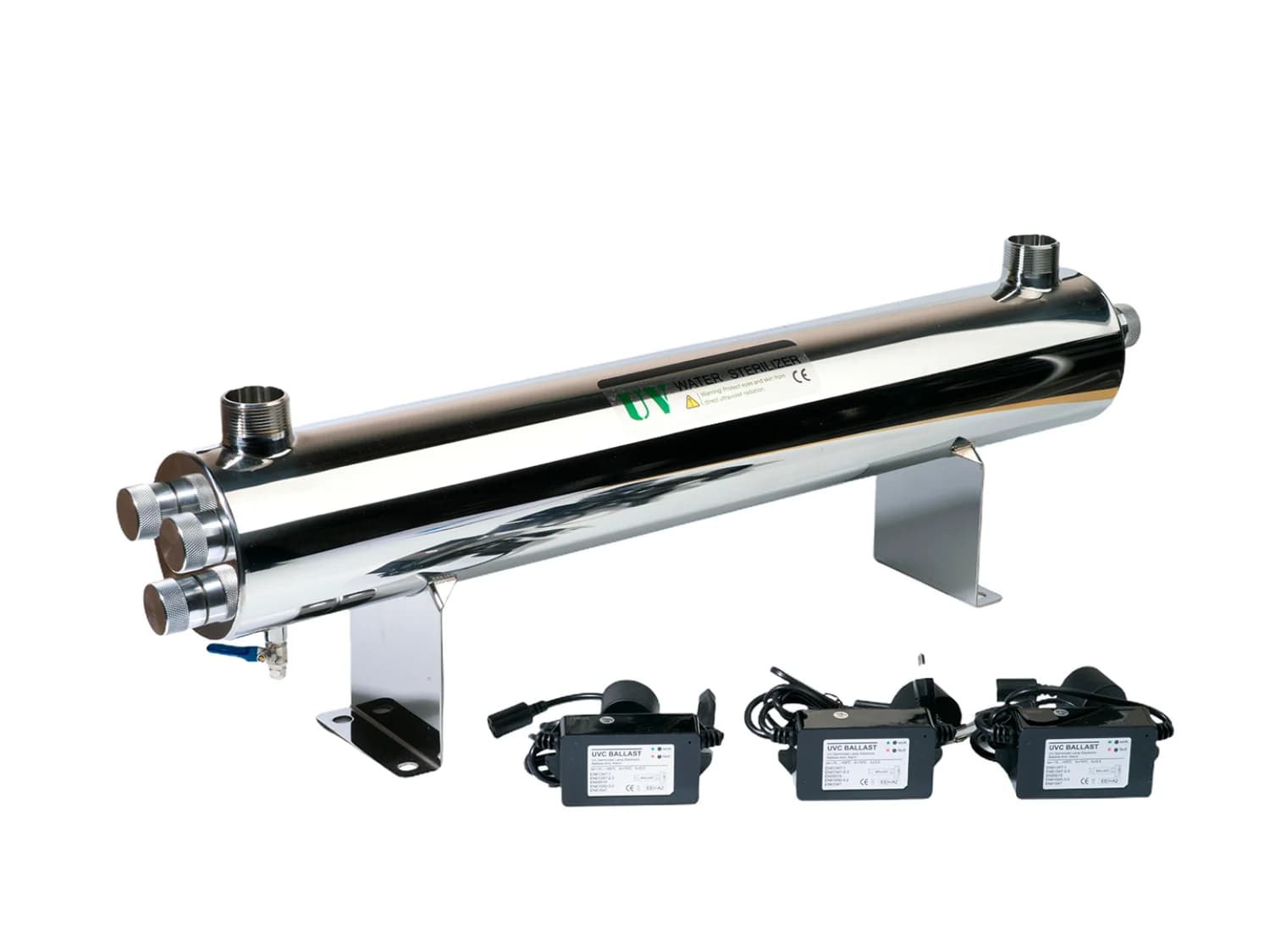
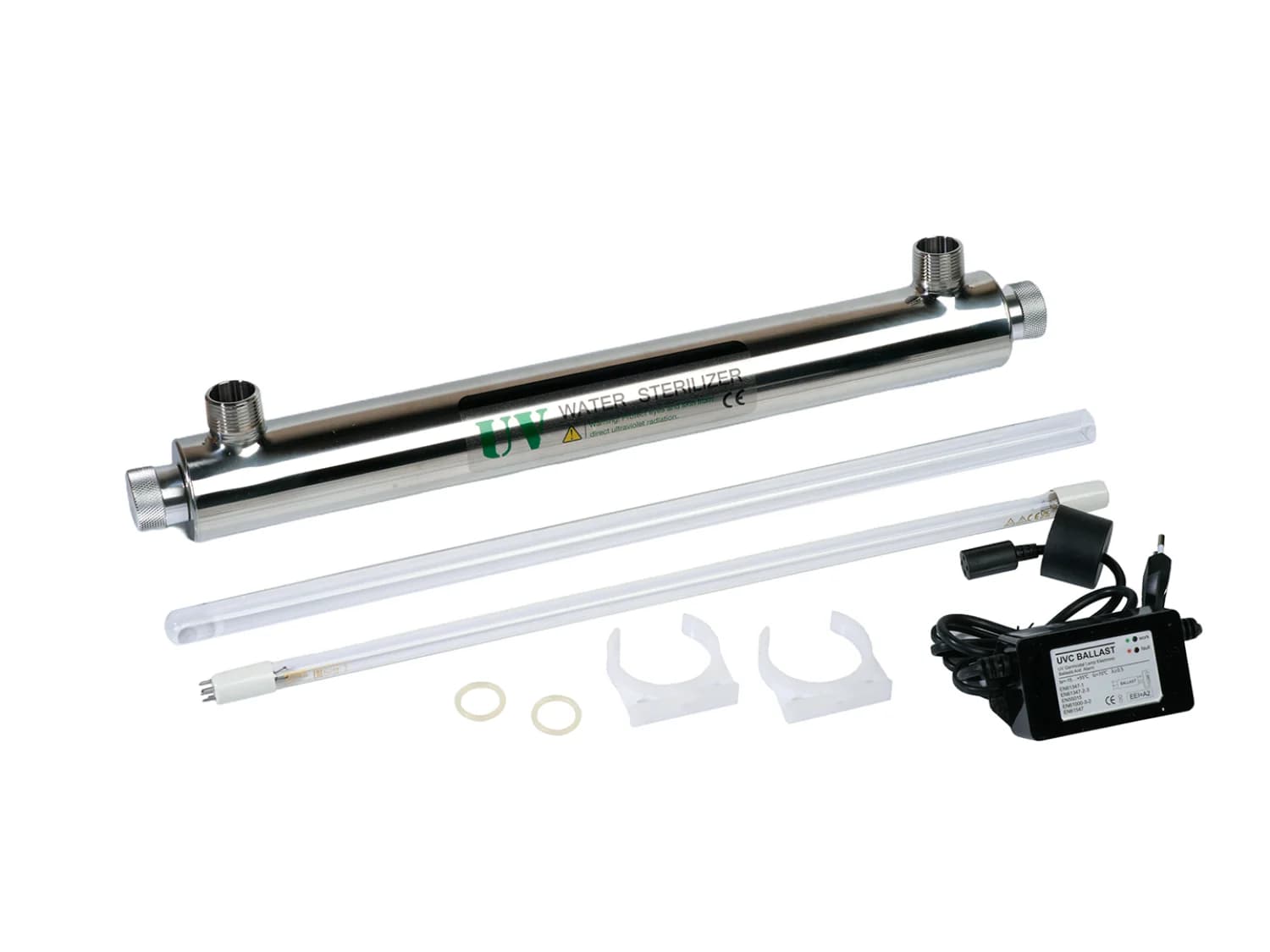
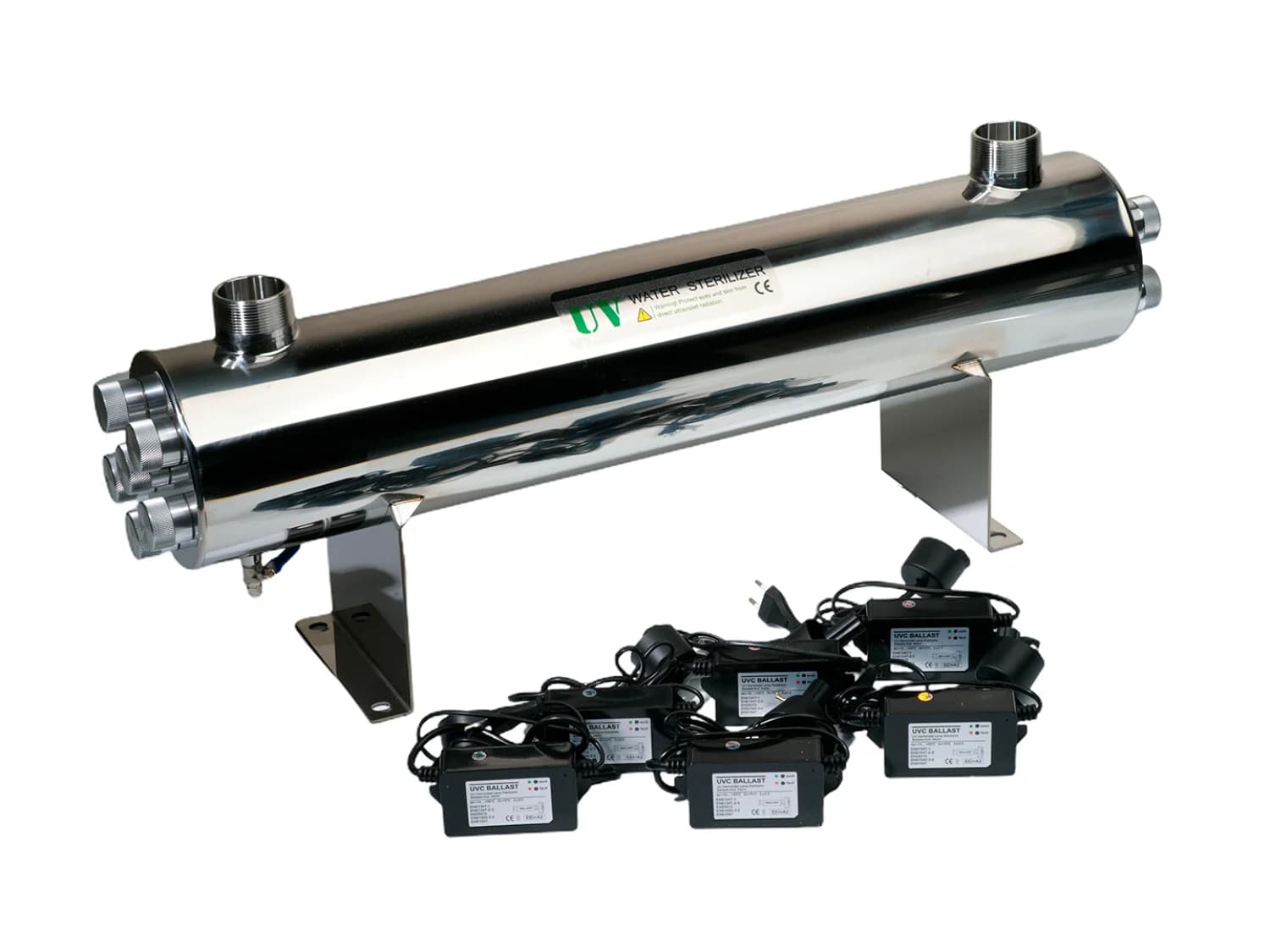
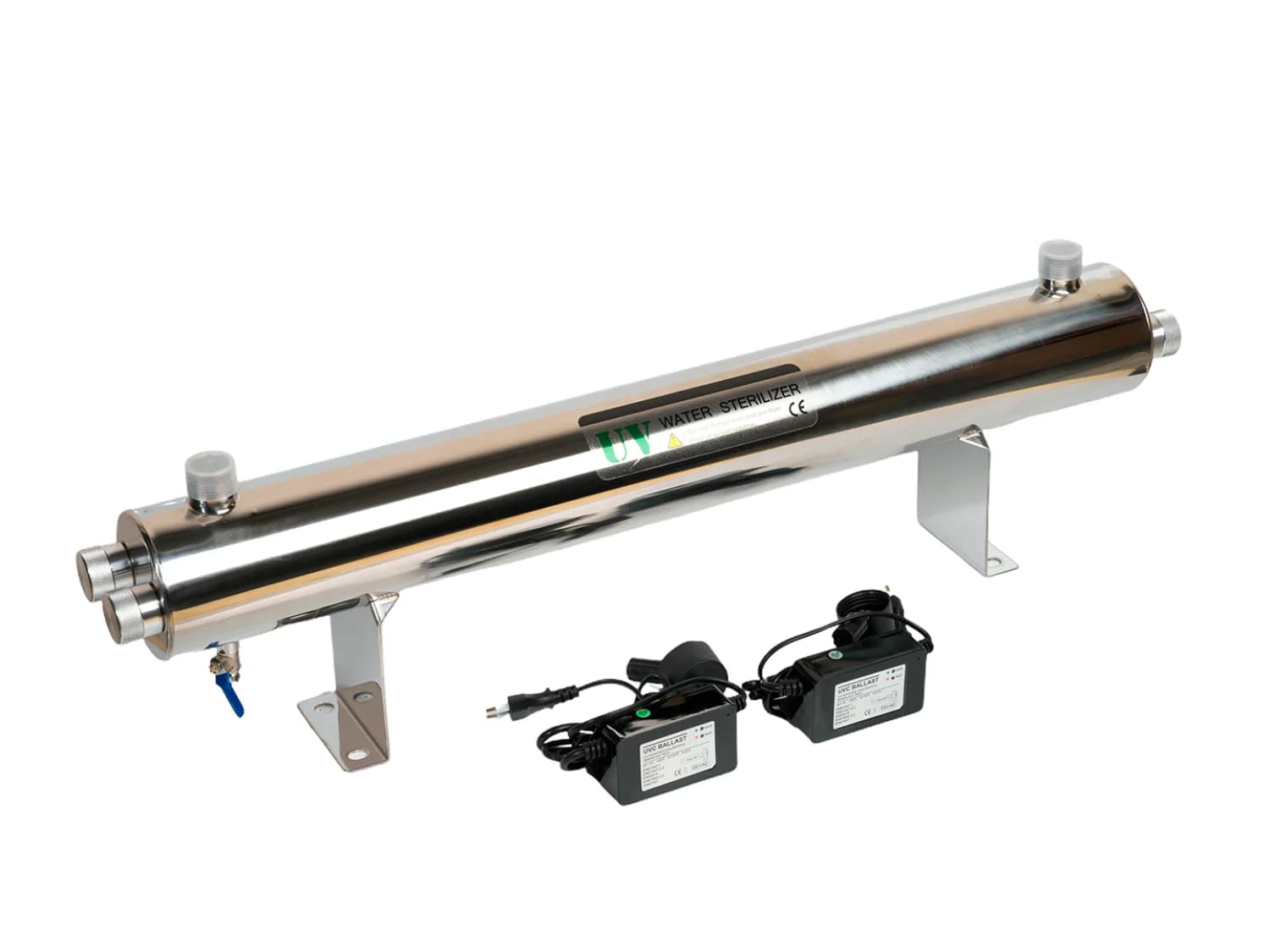
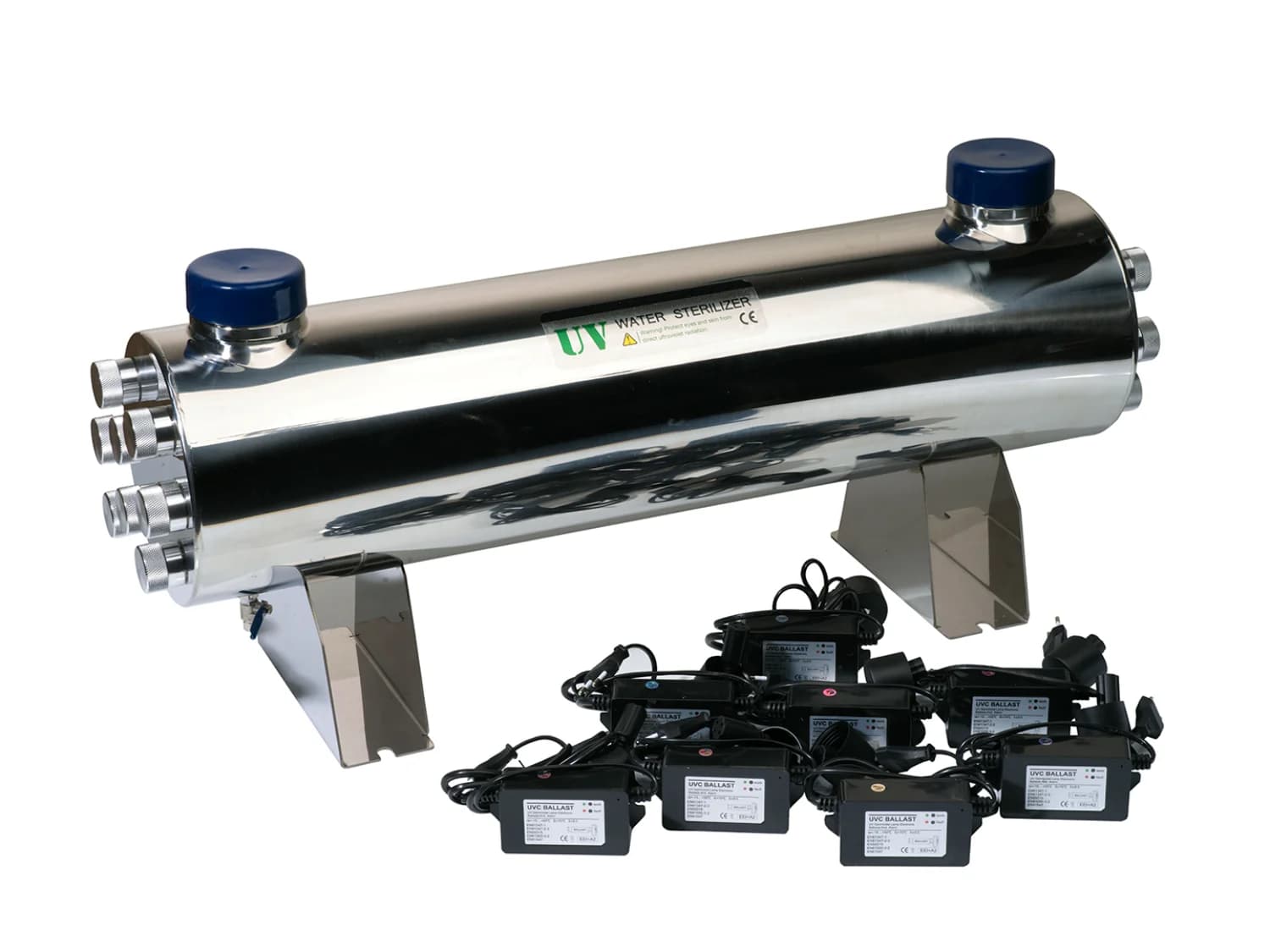
UV disinfection deserves a separate note, because it is often installed with the wrong expectations. The lamp reliably inactivates bacteria in the water flowing through its chamber — and only there. It leaves no residual substance in the water and does nothing to the film downstream. UV at the building inlet therefore protects the network from new bacteria coming in, and UV on the make-up line of a pool or cooling tower protects that particular loop from colonisation. It cannot destroy film that has already formed in the pipes. That takes temperature or a chemical with residual action.
All chemical methods require regular measurement of the residual concentration at the far points of the network. A chemical that does not reach the last riser protects only the lower floors.
What next
If you are responsible for a hotel water system, start with a survey, not an equipment purchase: draw a network diagram showing dead legs and rarely used outlets, take temperatures at the heater outlet, on the circulation return and at the most remote outlet, and check how long it takes for hot water to reach a stable temperature. Keep a log of flushing in empty rooms. A culture test for Legionella takes about a week or longer to give a result, so sampling needs to be planned ahead.
Once the survey has shown which part of the system is not coping, choose the equipment: a dosing station for the chosen chemical, or a UV steriliser for the building inlet and make-up loops. More on water treatment for hotel systems is in the article on water treatment for hotels.