Scale or corrosion: how the Langelier and Ryznar indices read a water analysis
Water is rarely "just hard" or "just soft". It either tends to deposit calcium carbonate on surfaces or to dissolve it — and with it the protective layer on metal. Which way it goes depends not on hardness alone but on a combination of five values and temperature. Let us look at how that combination is calculated and what the result means for heaters, pipes and the choice of water treatment.
What actually drives scale
Scale in domestic and industrial systems is mostly calcium carbonate. It precipitates when the water holds more calcium and carbonate ions than it can keep in solution. That capacity depends on four things:
- ✓Calcium hardness — how much calcium the water contains.
- ✓Alkalinity — how much bicarbonate and carbonate there is to form carbonate ions.
- ✓pH — the higher it is, the larger the share of bicarbonate that turns into carbonate ions.
- ✓Temperature — unlike most salts, calcium carbonate becomes less soluble when heated.
The fifth value, total dissolved solids, has a weaker effect: the more foreign ions the water contains, the slightly higher the solubility.
This is why waters of the same hardness can behave in opposite ways. Hard but acidic water with low alkalinity produces almost no scale and corrodes metal at the same time. Water of medium hardness with high alkalinity and a pH above 8 forms dense scale even with moderate heating.
The Langelier index: is the water supersaturated or not
The Langelier saturation index (LSI) compares the actual pH of the water with the saturation pH — the value at which water with the same calcium, alkalinity, dissolved solids and temperature would be in exact equilibrium with calcium carbonate.
LSI = pH − pHs
The saturation pH is calculated as pHs = (9.3 + A + B) − (C + D), where:
- ✓A = (log TDS − 1) / 10, TDS being total dissolved solids in mg/L;
- ✓B = −13.12 · log(t + 273) + 34.55, t being temperature in °C;
- ✓C = log(Ca) − 0.4, Ca being calcium hardness in mg/L as CaCO₃;
- ✓D = log(Alk), Alk being alkalinity in mg/L as CaCO₃.
The index is easy to read. A positive LSI means the water is supersaturated and tends to deposit calcium carbonate. A negative one means it is undersaturated and tends to dissolve it: no protective carbonate layer forms on the walls, and the metal is exposed to corrosion. Around zero means equilibrium.
The index shows direction, not rate. An LSI of +0.3 does not mean a heater will scale up within a month: the rate also depends on the amount of calcium, the flow regime and the surface material. But the sign of the index reliably answers the main question — will there be scale or not.
The Ryznar index: how strong the tendency is
The Ryznar stability index (RSI) uses the same quantities but is built differently: RSI = 2·pHs − pH. It was derived from observations of real pipelines and better reflects how intense the process is. It is usually read as follows: below 6, the water deposits scale, more heavily the lower the value; from 6 to 7, close to stable; above 7, the water is aggressive, and above 8 noticeably corrosive.
In practice both indices are calculated together. If they agree, the conclusion can be trusted. If they diverge, the water is on the borderline, and decisions should be made with a margin.
A worked example: one water, two temperatures
Take borehole water with the following analysis: calcium hardness 250 mg/L as CaCO₃ (about 2.5 mmol/L, or 14 °dH), alkalinity 200 mg/L as CaCO₃, total dissolved solids 400 mg/L, pH 7.6. Let us calculate the indices for cold water at 15 °C and for water in a heater at 60 °C.
| value | 15 °C, cold pipe | 60 °C, heater |
|---|---|---|
| A | 0.16 | 0.16 |
| B | 2.28 | 1.46 |
| C + D | 4.30 | 4.30 |
| pHs | 7.44 | 6.62 |
| LSI | +0.16 | +0.98 |
| RSI | 7.3 | 5.6 |
In the cold pipe the water is close to equilibrium: the LSI is slightly above zero and the RSI is in the stable range. There will be no scale in the cold supply. In the heater the same water gives an LSI of about +1 and an RSI below 6 — a clear tendency to scale. This is why the complaint "the water is fine, but the heat exchanger keeps scaling up" is almost always right on both counts.
One caveat about the calculation. It uses pH measured at room temperature. When water is heated its pH changes as well, and a precise calculation takes that into account. For a water treatment decision the simplified calculation is enough: it correctly shows the direction and the order of magnitude.
What to do with the result
The decision depends on which way the index points and at what temperature.
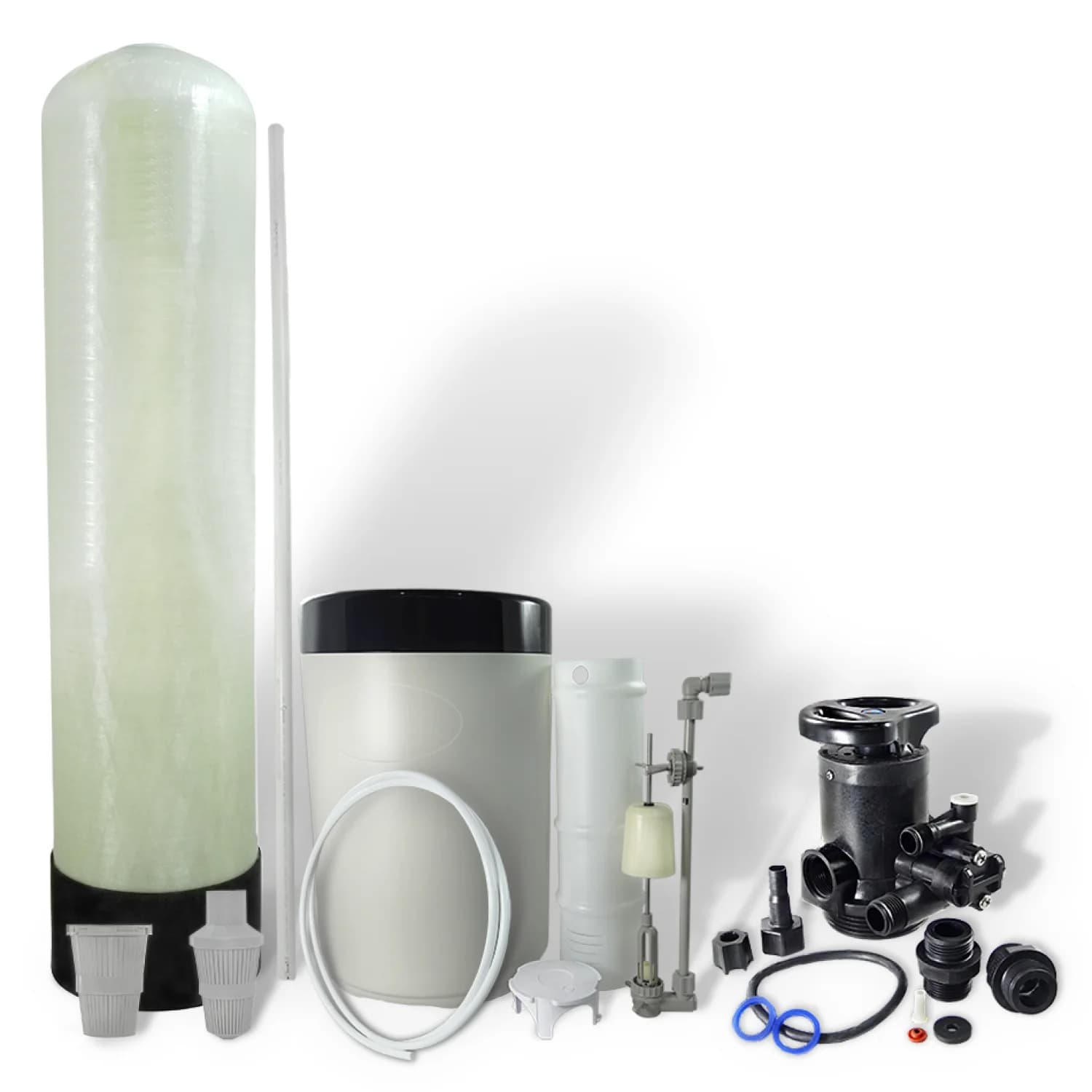
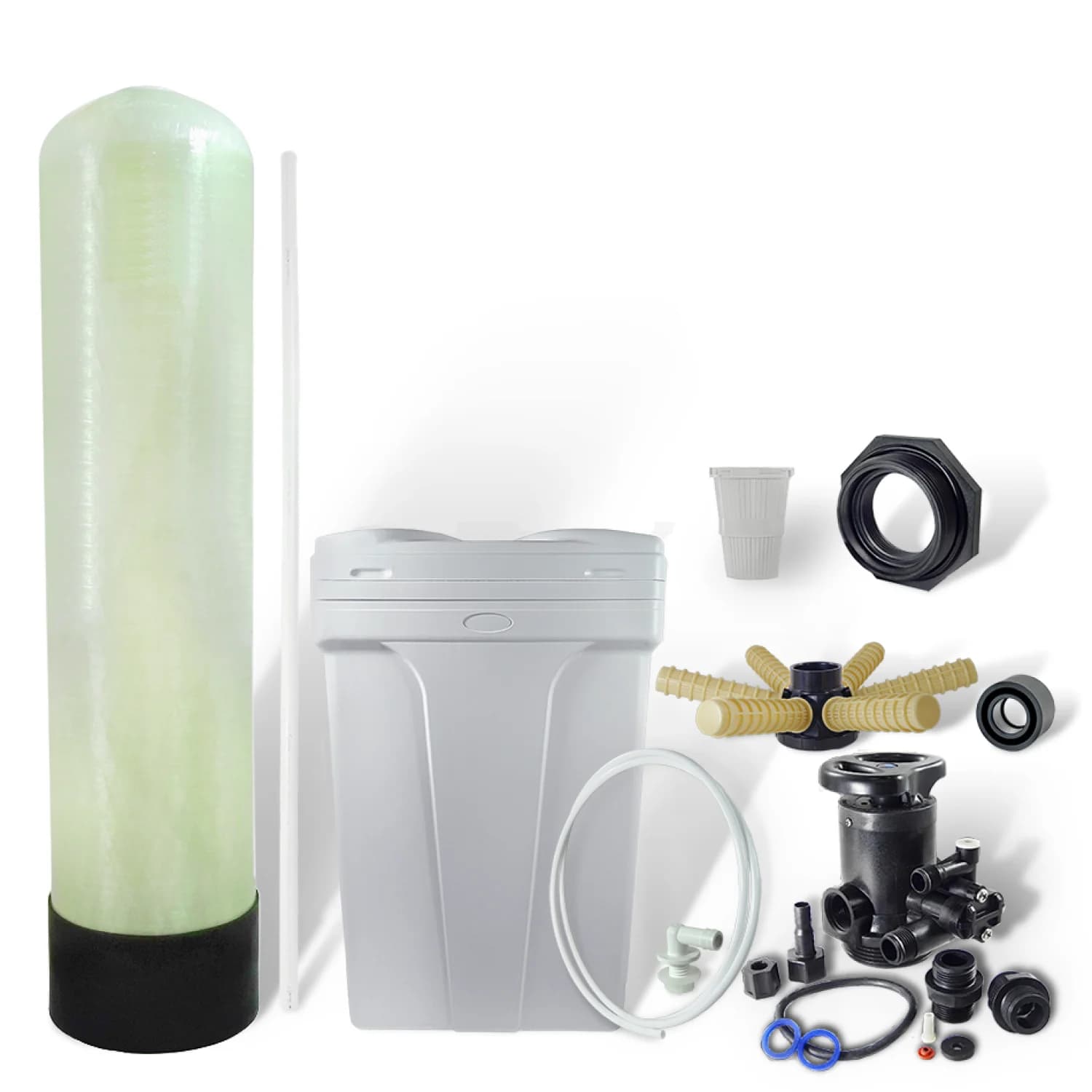
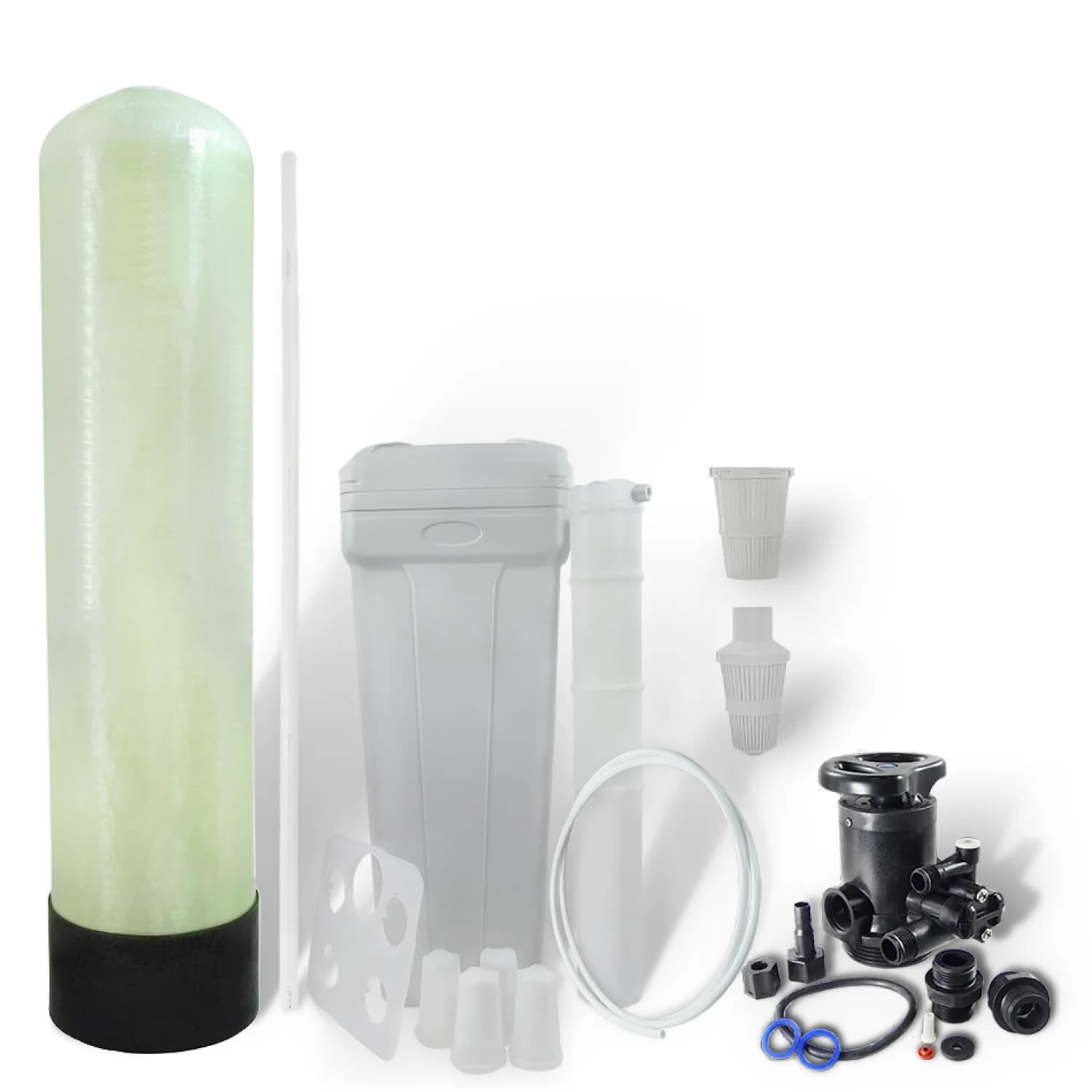
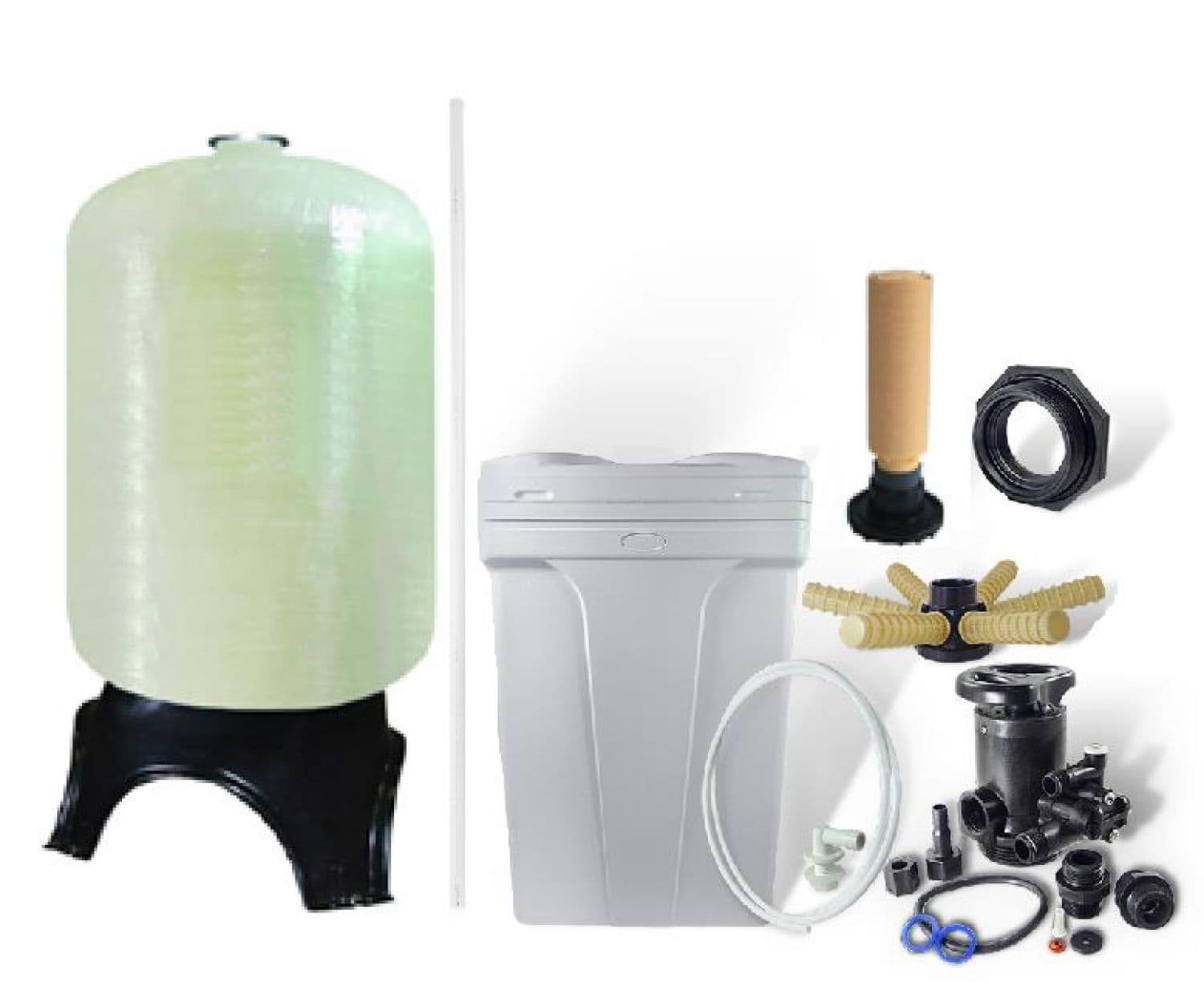
The water tends to scale when heated. The main remedy is ion-exchange softening: calcium and magnesium are replaced by sodium, C in the formula falls, pHs rises and the index goes down. For small hot water systems, dosing polyphosphates or other scale inhibitors with a dosing station is also used: calcium carbonate stays in the water but crystallises on surfaces less readily.
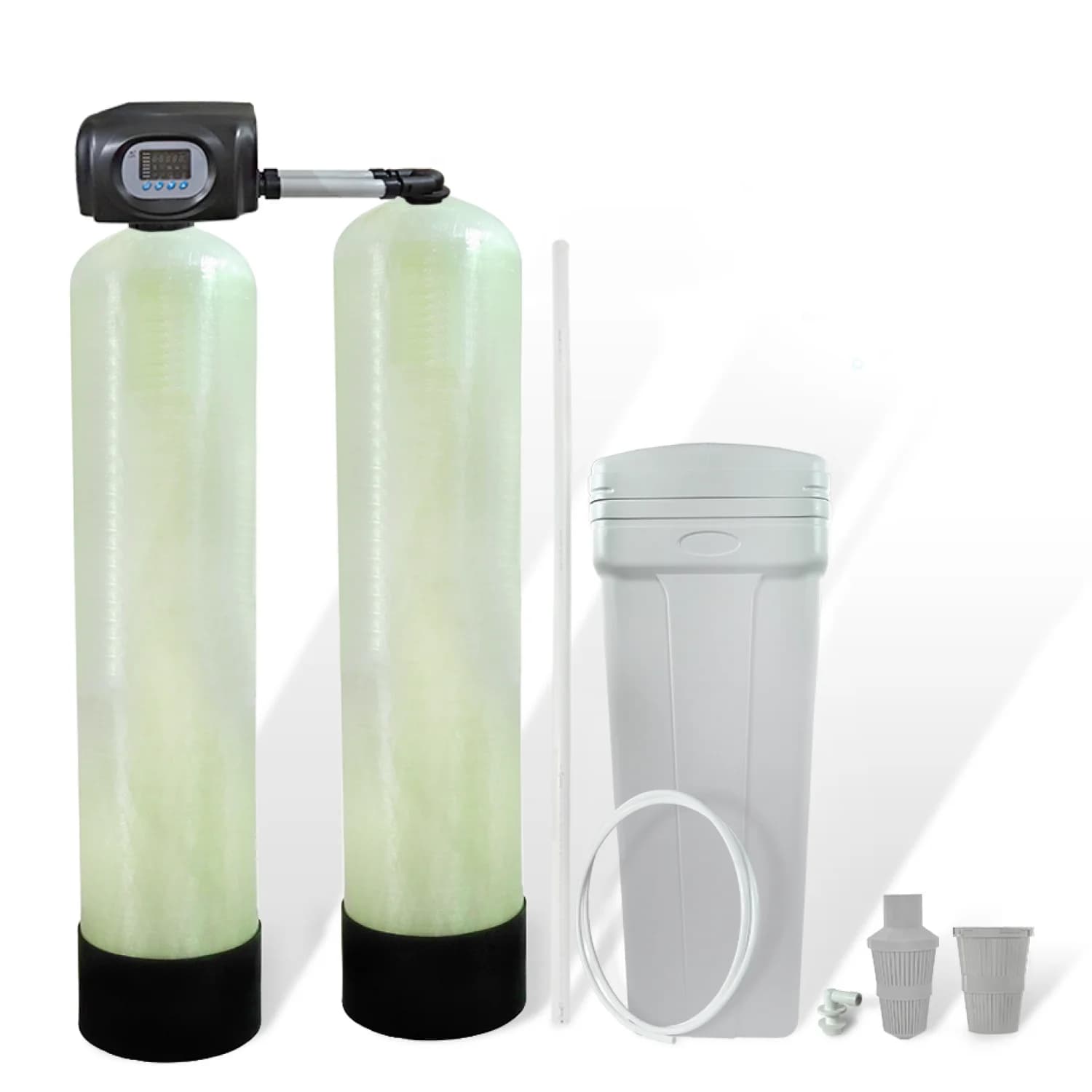
Softened water becomes aggressive. This is the other side of softening, and it gets less attention. Water leaving an ion exchanger with near-zero hardness has a sharply negative LSI: no carbonate layer forms on the walls, and the old one begins to dissolve. In galvanised steel and copper networks this shows up as increased corrosion. For hot water systems, water is therefore often not softened to zero: a blending valve at the softener outlet mixes in raw water and leaves residual hardness at which the index stays around zero. Duplex units supply softened water continuously while one of the vessels regenerates — which matters when the blend is set for a steady flow.
The water is aggressive to begin with. This is typical of soft surface water and of reverse osmosis permeate, which contains almost no calcium or alkalinity. Here the water is stabilised: pH is corrected, the water is passed through a mineral media that adds calcium and alkalinity, or a corrosion inhibitor is dosed.
What next
The calculation needs five values from a single report: calcium hardness (separately from total hardness), alkalinity, pH, total dissolved solids and the sampling temperature. If the report gives only total hardness, the result will be overstated: magnesium does not enter the formula. How to order an analysis and read the report is covered in the article on water analysis.
Calculate the indices for two temperatures — cold water and the operating temperature of your heater or heat exchanger. If at operating temperature the LSI is above zero and the RSI below 6, you need scale protection: look at ion-exchange units with outlet blending, or inhibitor dosing. If the LSI is already negative in cold water, stabilise the water first, and only then discuss any other equipment.