Cartridge replacement schedule: count litres, not months
The cartridge is the only part of a treatment system that is fully consumed and needs the owner's attention. Most people replace it either "when they remember" or strictly every six months, and both approaches are equally wrong. Here is what actually measures out a cartridge's life, and how to build a schedule you do not have to keep in your head.
Service life is measured in litres
A cartridge wears out not from time but from the water that has passed through it. A sediment cartridge holds back suspended solids as long as there is room in its pores; a sorption cartridge retains organics and chlorine until the capacity of the carbon is used up. Neither depends on the calendar.
Hence the spread that confuses people. One and the same cartridge, with one and the same rated life, lasts a different number of months in a house lived in year-round than in a cottage visited at weekends. Water quality widens the gap further: on turbid water a sediment cartridge clogs many times faster than on clarified water, even though it passes the same number of litres.
The conversion takes one step: divide the rated life in litres by the daily consumption in litres, and you get the number of days until replacement. Take daily consumption from the water meter over a couple of weeks, not from memory. An interval in months only means something once that sum has been done for the particular house and the particular water.
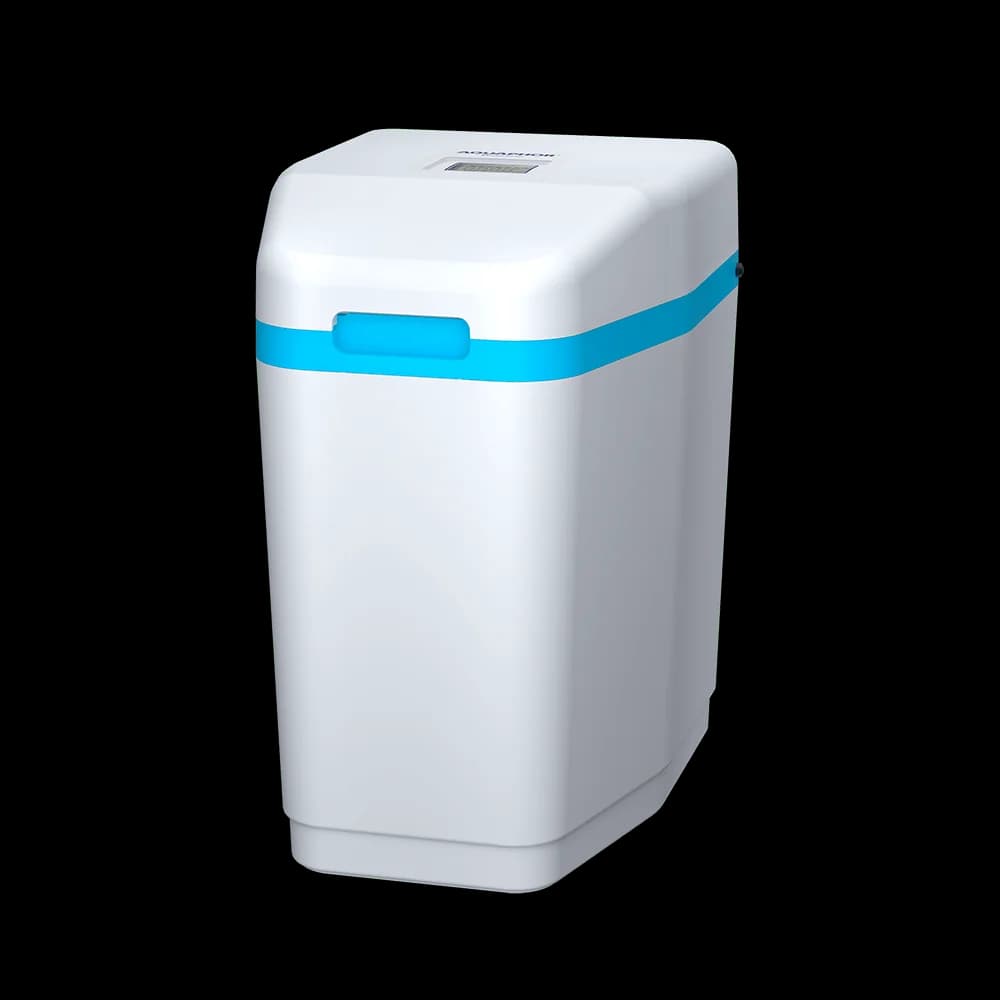
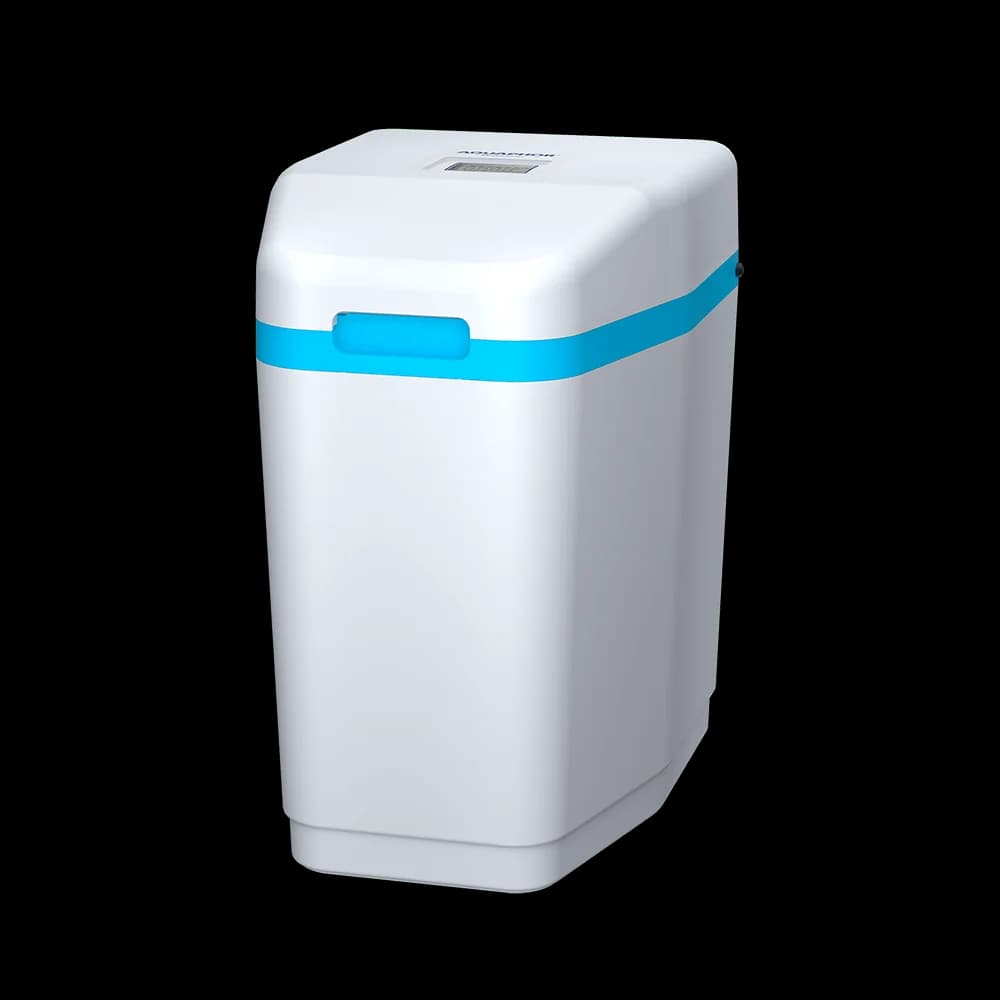
Consumables are one thing, permanent media another. In cabinet systems such as the Aquaphor WS series the ion exchange media needs no replacement and is rated for a 10-year service life: it is restored by regeneration with brine, and the consumable there is salt, not filter material. The schedule discussed below applies to cartridges in housings and to replacement modules of drinking water systems.
What happens if you put it off
An overdue cartridge does not stop working overnight — it goes through three stages, each unpleasant in its own way.
Pressure drop. A clogged sediment cartridge creates a differential pressure. In a house you notice it as a weak stream; in a reverse osmosis system you notice it in how long the storage tank takes to fill. That time grows because less pressure now reaches the membrane than is needed to push water through it. The pump, meanwhile, is working under a load it was never sized for.
Secondary contamination. What the cartridge held back does not go anywhere: suspended solids, organics and iron stay inside, warm and wet. Once its sorption capacity is exhausted, the carbon media starts releasing what it accumulated back into the water, and the carbon bed itself becomes a growth medium for bacteria. At some point the water after an old cartridge is worse than before it.
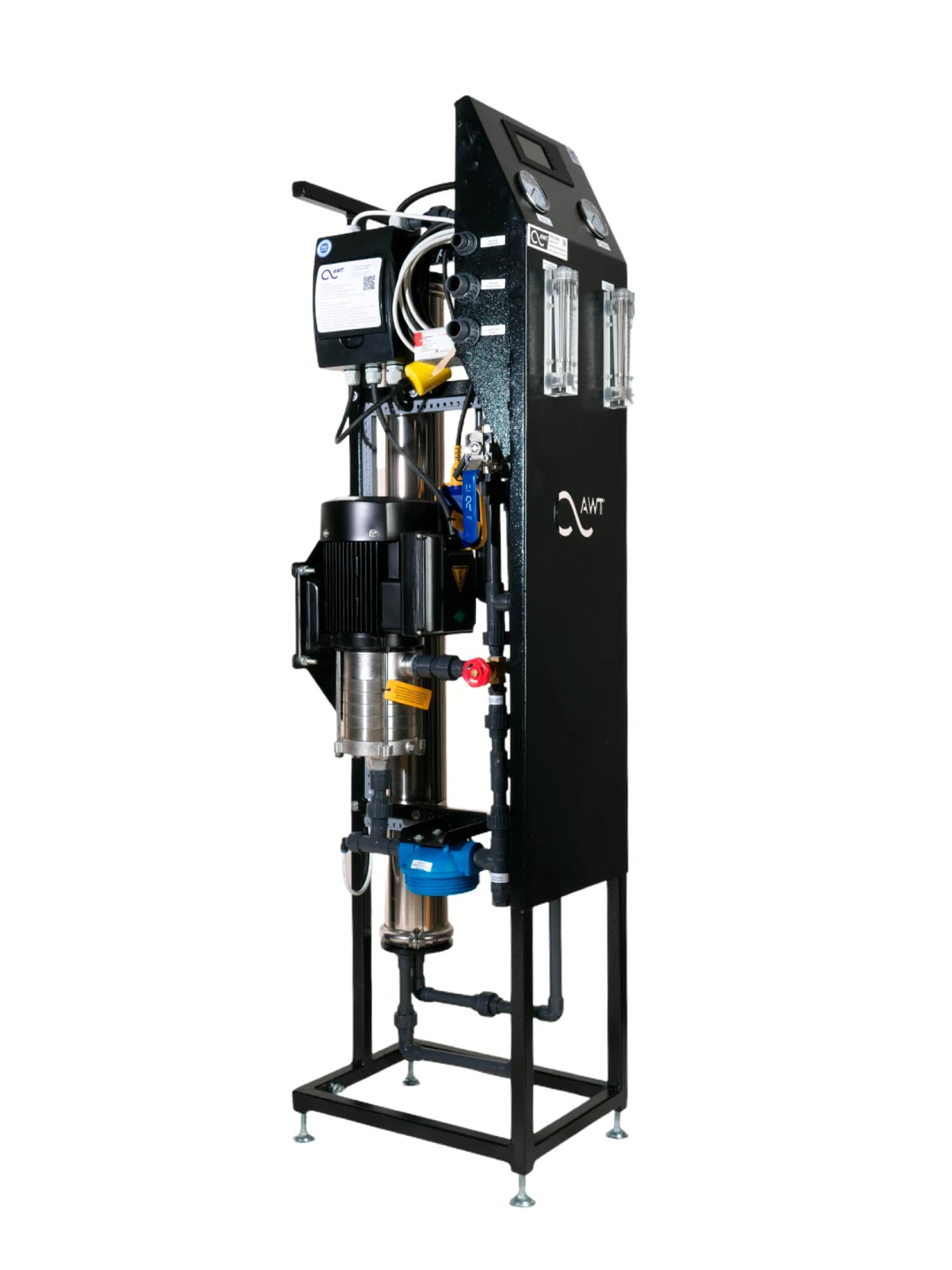
Breakthrough. A sediment cartridge clogged to the limit releases everything it has accumulated in one go when pressure spikes — the dirt travels further down the line. If a reverse osmosis membrane comes next, that is what you will be paying for: in SWT RO series units the BB20 sediment cartridge sits right in front of the membrane housings and exists precisely so that suspended solids never reach them. A membrane costs an order of magnitude more than a cartridge and does not always recover after flushing.
Signs that it is time to replace
A schedule in litres is the basis, but between scheduled replacements it pays to keep an eye on the water itself. The signals are simple:
- ✓the stream has weakened with the tap fully open, while pressure elsewhere in the house is unchanged;
- ✓the storage tank of the drinking water system fills noticeably slower than usual;
- ✓a taste or smell the filter used to remove has come back — a characteristic sign that the carbon is exhausted;
- ✓deposits or rusty marks appear on dishes and fittings again;
- ✓in a transparent housing the cartridge is no different in colour from the dirt around it;
- ✓the pressure gauges before and after the filter diverge more than they did with a new cartridge fitted.
Any one of these means replacement, not washing. A sediment cartridge does partly recover its throughput after washing, but washing does not remove the accumulated biology, and the next stage arrives sooner.
Replacement checklist
- ✓Shut off the water supply upstream of the filter.
- ✓Release the pressure — open the nearest tap downstream of the filter and wait until water stops running.
- ✓Put a basin underneath: a large housing holds a noticeable volume of water, and in the BB20 size that is several litres.
- ✓Unscrew the housing with the supplied wrench, take out the old cartridge, rinse the housing inside.
- ✓Inspect the O-ring: replace rubber that is cracked, torn or has lost its shape, and grease an intact ring with silicone lubricant.
- ✓Fit the new cartridge, checking the flow direction against the arrow on the housing.
- ✓Screw the housing on by hand and give it a final turn with the wrench, gently — plastic thread does not tolerate over-tightening.
- ✓Open the supply slowly to avoid water hammer, and inspect the joint for leaks.
- ✓Flush the new cartridge to drain until the water runs clear: carbon cartridges release dust in the first litres.
- ✓Record the date and the meter reading.
The mistakes behind most unscheduled call-outs: opening a housing that is still under pressure because the pressure was never released; over-tightening the housing with the wrench and finding a crack along the thread a month later; skipping the flush on a new carbon cartridge and driving carbon dust into the membrane; forgetting the O-ring, or greasing it with mineral oil instead of silicone — the rubber swells and stops sealing. A case of its own is replacing one cartridge out of three: the line performs at its weakest stage, and two fresh cartridges do not make up for one that is exhausted.
Replacement log
A log is the only way to turn a schedule from guesswork into figures. Four columns are enough: date, meter reading, what exactly was replaced, and the condition of the removed cartridge in one word.
After the second replacement the log starts answering the question it was kept for: how many litres a particular cartridge really withstands on this water. If the removed cartridge is clogged to the limit every time, long before it has passed its rated litres, the water ahead of it needs clarifying — the answer is an extra stage, not more frequent replacement. If the cartridge comes out almost clean, the interval can be stretched.
The log also settles the question of responsibility when more than one person services the system: a recorded meter reading can be verified, memory cannot.
What next
Collect three things: the rated life of every installed cartridge in litres, the daily consumption from the meter, and the date of the last replacement. That is enough to build a schedule a year ahead and order consumables in one batch instead of one at a time in a hurry.
A set of replacement cartridges is chosen to match the system already installed: housing size and seating differ from series to series. Current models and their replacement elements are in the 3-in-1 filters section. If you do not know which system you have, start with a photograph of the housing and the head — the two of them pin down the size unambiguously.