PFAS in water: what "forever chemicals" are and which methods really remove them
PFAS are a large group of synthetic fluorinated organic compounds that hardly break down, either in nature or at treatment plants. This persistence has earned them the name "forever chemicals". For the owner of a water treatment system the question is practical: does the existing scheme retain them, and if not, which stage needs to be added and what happens afterwards to what it has captured.
What PFAS are and how they get into water
PFAS (per- and polyfluoroalkyl substances) are thousands of compounds in which a carbon chain is fully or partly surrounded by fluorine atoms. The carbon–fluorine bond is one of the strongest in organic chemistry. Neither bacteria nor chlorine nor ultraviolet light at disinfection doses break it. The best-studied members of the group are PFOA (perfluorooctanoic acid) and PFOS (perfluorooctane sulfonate).
For decades these substances have been used wherever resistance to water, grease and fire is needed: non-stick coatings, water-repellent textile finishes, packaging for greasy food, firefighting foams, electroplating. They reach water with industrial effluent, with leachate from landfills, and from places where firefighting foam was used — airfields, fire training grounds, industrial sites.
For treatment, the split by chain length matters. Long-chain PFAS such as PFOA and PFOS adsorb better and are easier to retain. Short-chain ones — often introduced as substitutes for the long ones — are more soluble and more mobile, and slip through a number of methods that cope with long chains.
Why this has become a water treatment issue
PFAS accumulate in the body and are eliminated slowly, over years. Studies link them to effects on liver function, immune response and lipid metabolism, among others. Regulators have therefore begun limiting them in drinking water at levels measured not in milligrams but in nanograms per litre.
The best-known example is EU Directive 2020/2184 on the quality of water intended for human consumption. It introduces two parameters: "Sum of PFAS" — 0.1 µg/L for the sum of twenty compounds listed in the directive, and "PFAS Total" — 0.5 µg/L for all PFAS together. EU member states were required to ensure compliance with these values from 12 January 2026.
These are European Union requirements, not a universal standard. In Georgia and other countries the applicable limit is set by the national regulator, and for a specific site — drinking water supply or wastewater discharge — it has to be confirmed in the permit documents. But the European values show the scale of the task well: the concentrations involved are thousands of times lower than the familiar limits for iron or nitrates.
This has a practical consequence for testing. A standard chemical water analysis report does not include PFAS at all. They are measured separately, by liquid chromatography with mass spectrometry, in a laboratory that works at such concentrations. Details matter when sampling: containers free of fluoropolymers, and no contact between the sample and PTFE seals or tape.
Which methods do not work
The first thing to understand: most of the usual stages of water and wastewater treatment do not remove PFAS, or remove only an insignificant fraction.
- ✓Coagulation, settling and sand filtration — retain suspended solids; dissolved PFAS pass through.
- ✓Biological treatment — bacteria do not break carbon–fluorine bonds; sometimes more persistent PFAS form from "precursors".
- ✓Chlorination and ozonation at normal doses — do not break the carbon–fluorine bond.
- ✓UV disinfection — a dose designed for microorganisms has no effect on PFAS.
- ✓Cartridge filters and cation-exchange softening — are not designed for these substances.
Adsorption, ion exchange and membranes: an honest comparison
There are three approaches that actually work. Each retains PFAS, but none destroys them — the substances move from the water into the media, the resin or the concentrate.
| method | long chains | short chains | what the process leaves behind |
|---|---|---|---|
| Granular activated carbon | retains well | early breakthrough | spent carbon containing PFAS |
| PFAS-selective anion-exchange resins | retain well | retain better than carbon | spent resin, usually single-use |
| Nanofiltration and reverse osmosis | retain 90–99 % and more | retain 90–99 % and more | PFAS-laden concentrate, 15 to 50 % of the flow depending on recovery |
Activated carbon is the most common and accessible option. It works well on PFOA and PFOS, but short-chain compounds pass through the bed much earlier. The media life is set not by suspended solids or pressure drop but by the moment PFAS break through, and that can only be seen by analysis. Organic matter in the raw water competes with PFAS for the carbon surface and shortens its life.
Selective anion-exchange resins are special resins tuned to PFAS anions. They are more compact than carbon for the same duty and hold short chains better. They are usually not regenerated but replaced and disposed of, since the regeneration solution itself would become a PFAS concentrate.
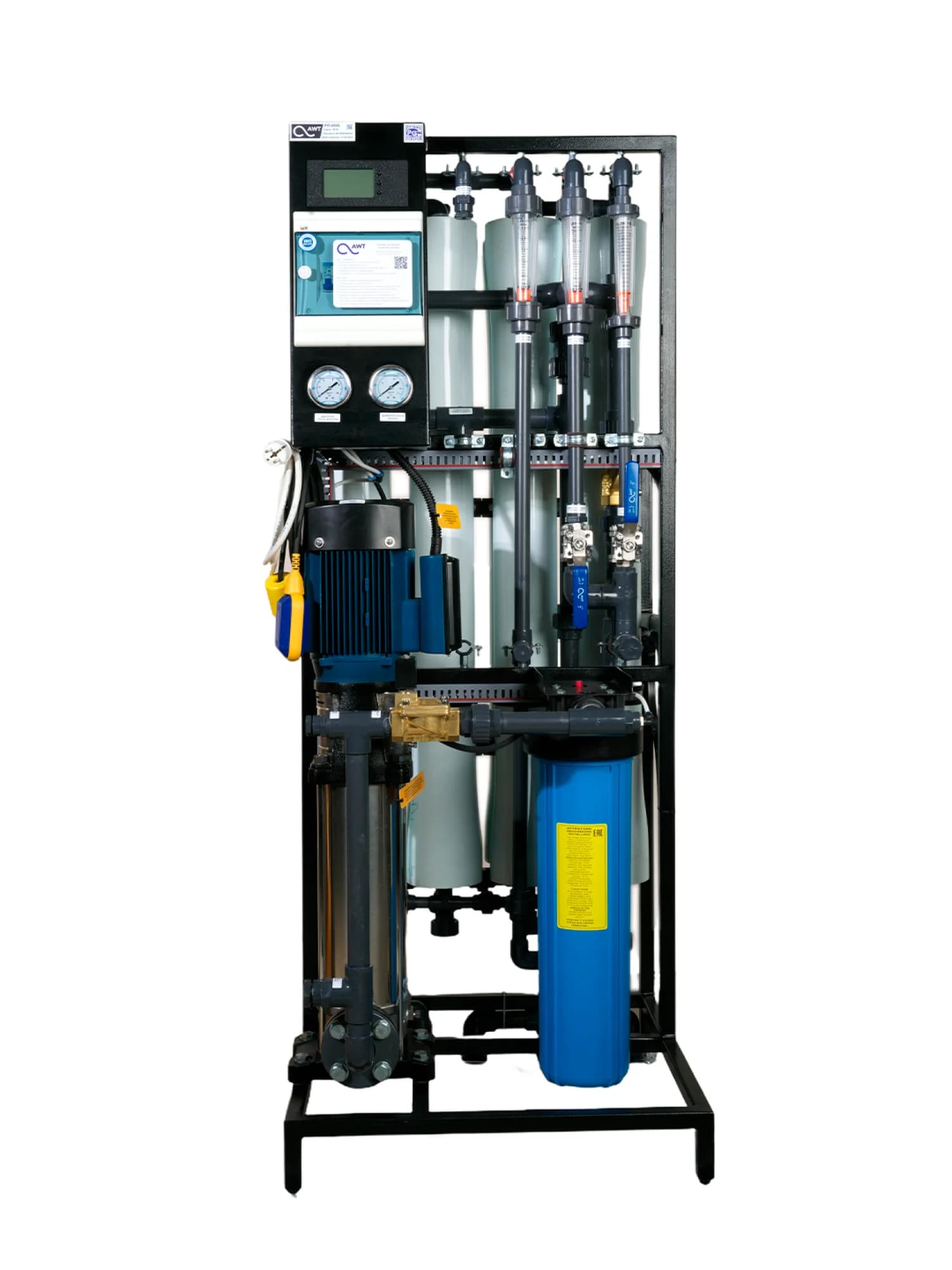
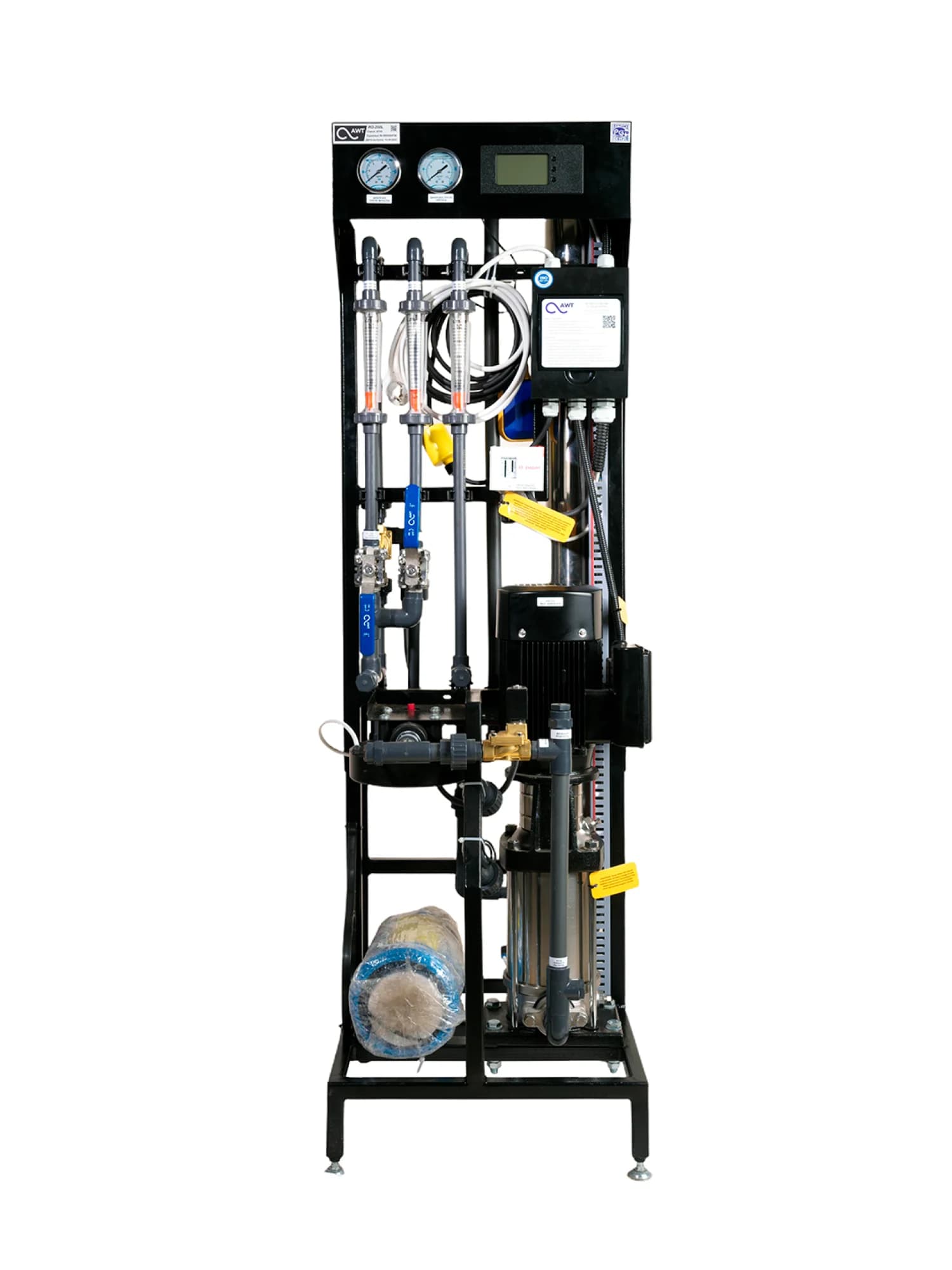
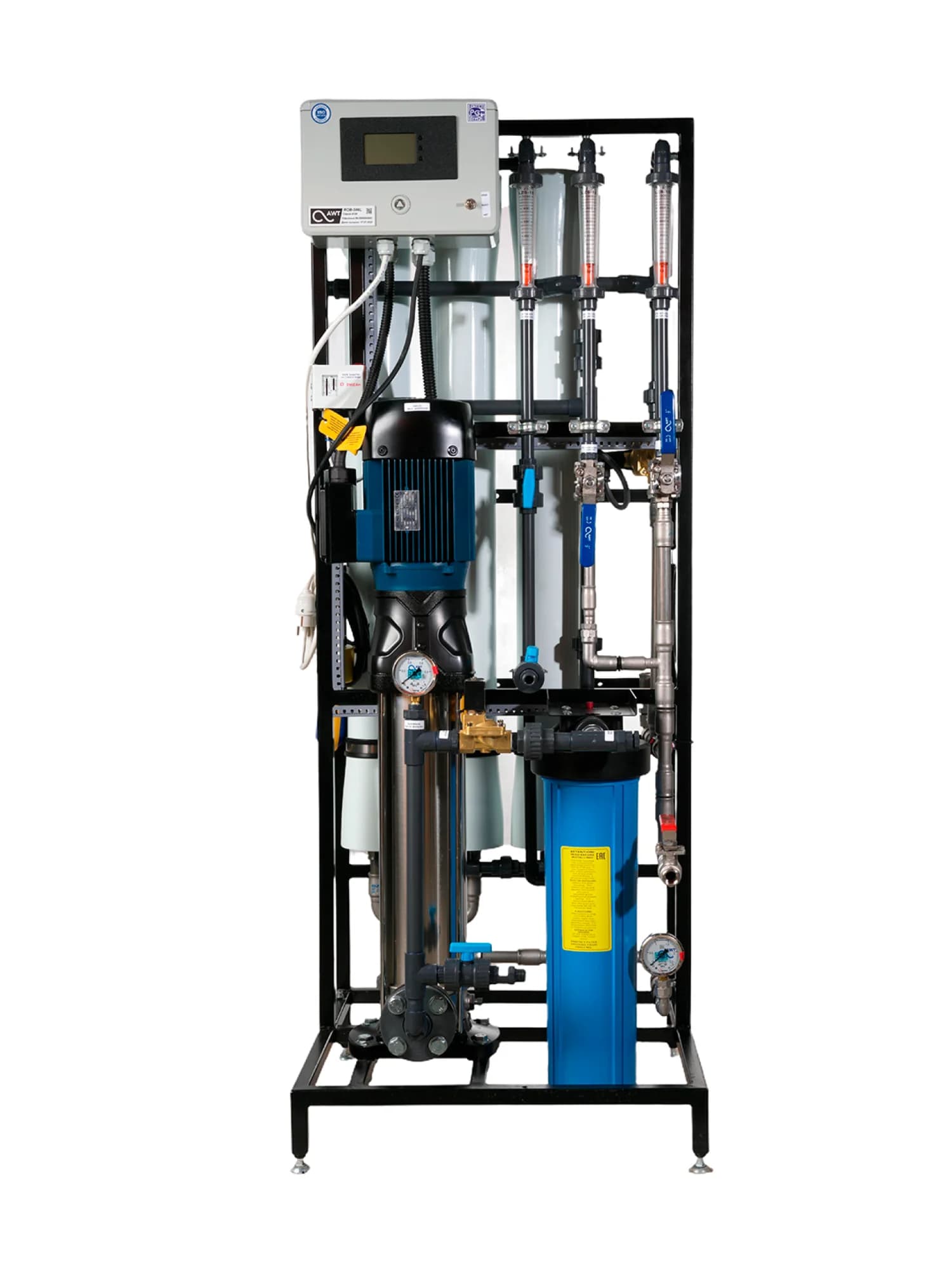
Reverse osmosis and nanofiltration form the broadest barrier: the membrane retains both long and short compounds, along with most other dissolved substances. The price of that breadth is the concentrate. A reverse osmosis unit splits the incoming flow into purified permeate and a concentrate in which PFAS are collected at elevated concentration. Discharging that stream back to where the water came from moves the problem rather than solving it. The membrane also needs proper pretreatment — see the article on membrane pretreatment.
What to do with what has been captured
The fate of the concentrate, spent carbon and resin is the main engineering question in any PFAS scheme. Few processes currently destroy these substances: high-temperature incineration, electrochemical oxidation and a number of methods still being introduced. Schemes are therefore designed first to reduce the volume of the contaminated stream — concentrating PFAS into a small volume — and only then to treat it or send it for disposal.
This approach — adsorption, ion exchange, membranes and electrochemistry assembled for a specific stream, with a separate solution for the concentrate — is the basis of SOLVIA PFAS Control.
What next
If you have reason to suspect PFAS — a site near an airfield, a fire training ground, a landfill or a plant that used fluoropolymers — start with a targeted analysis: order PFAS testing separately, from a laboratory with mass spectrometry, and check which list of compounds it measures. In parallel you need a regular full water analysis: organic matter, hardness, iron and dissolved solids determine carbon life and the operating mode of a membrane.
With the results in hand, the main barrier is chosen. For drinking water at a small site this is more often carbon or a selective resin with breakthrough monitoring; for a complex composition and short chains, reverse osmosis with a well-planned approach to the concentrate.